Solar for the Hill, the Coast, and the Canyon

Palos Verdes Peninsula solar has to respect the land first.

PVP Solar is focused on solar and battery systems for one of Southern California’s most beautiful, complicated, and energy-sensitive places: the Palos Verdes Peninsula.

01

Local Terrain

Palos Verdes is not a flat subdivision. It is ridgelines, canyons, ocean wind, clay, roads that bend, homes that step down hillsides, and roofs that demand careful layout.

02

Local Weather

The Peninsula’s mild coastal climate is good for solar equipment life, but morning clouds, fog, roof orientation, and winter rain patterns matter in the design.

03

Local Resilience

When utility power becomes uncertain, batteries stop being a luxury. They become part of the home’s emergency infrastructure.

The Peninsula

A short history of Palos Verdes

The Palos Verdes Peninsula has always been different from the flat basin below it. Long before modern cities, ranches, country clubs, and coastal estates, the Peninsula was a prominent coastal landscape with Native American history, open slopes, marine views, and natural resources.

The name “Palos Verdes” reaches back into the Spanish and Mexican rancho era. Rancho de los Palos Verdes became part of the larger Southern California story of ranching, land grants, coastal settlement, agriculture, and eventual planned development.

In the 20th century, the Peninsula became known for deliberate planning, open space, equestrian culture, coastal roads, large lots, view corridors, and strict local control. The four cities of the Peninsula — Palos Verdes Estates, Rancho Palos Verdes, Rolling Hills, and Rolling Hills Estates — each reflect a desire to protect the character of the hill rather than become another anonymous piece of Los Angeles sprawl.

That history matters for solar. A solar system here should not look like it was dropped from a warehouse catalog. It should be designed around roof geometry, sightlines, homeowners association rules, fire access, utility requirements, drainage, and the dignity of the property.

Portuguese Bend

The landslide changed the meaning of backup power.

A living geology lesson

Portuguese Bend is not simply a neighborhood with a road problem. It is a historic landslide area, a moving landscape where geology, rainfall, groundwater, roads, utilities, homes, and public safety collide.

When the grid is no longer certain

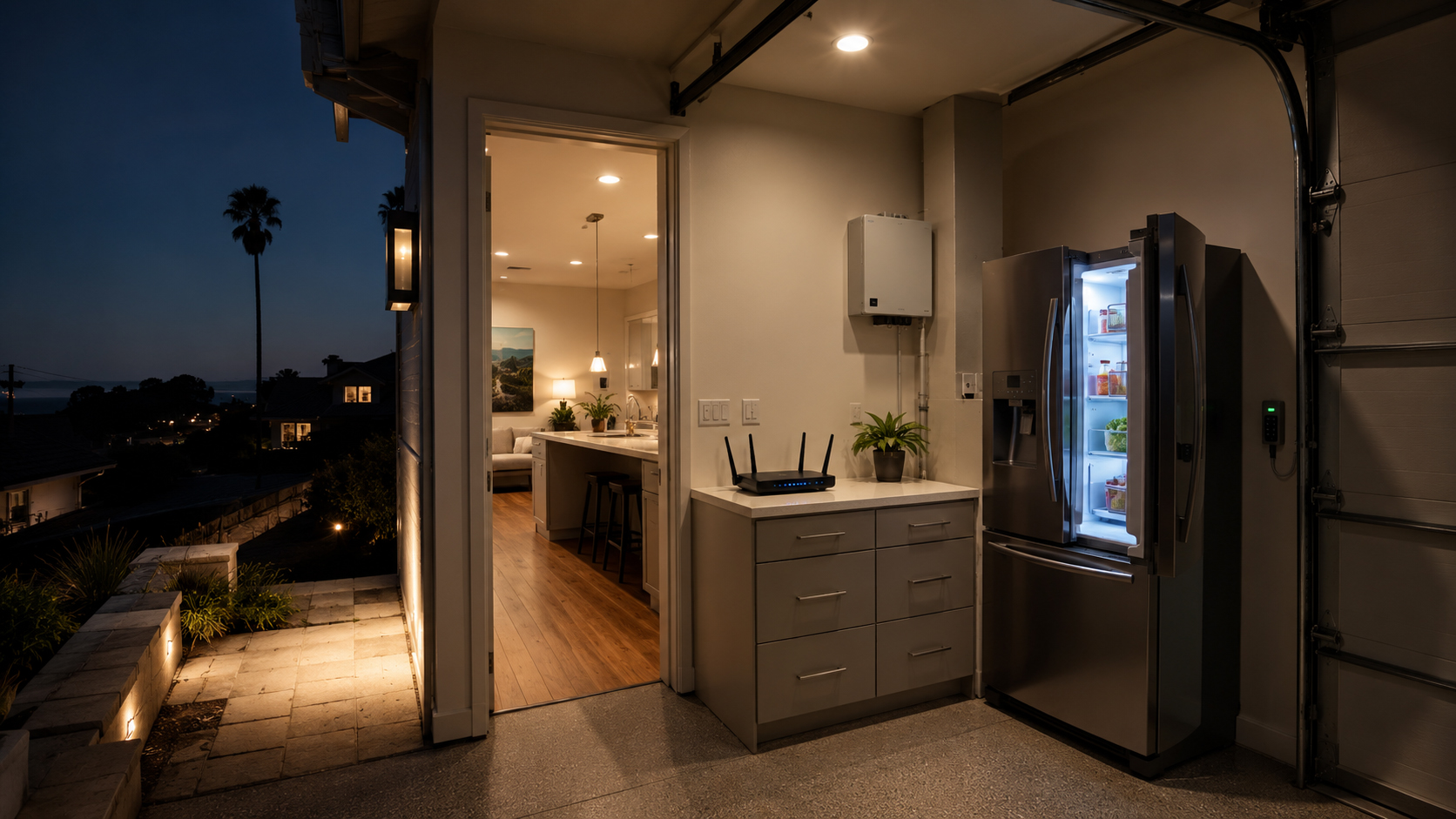
During the recent acceleration of land movement, utility service became a core survival issue. A home without stable electricity is not just uncomfortable. It can lose refrigeration, communications, medical equipment, lighting, security, pumping, garage access, and basic livability.

ABC Solar’s work in the crisis

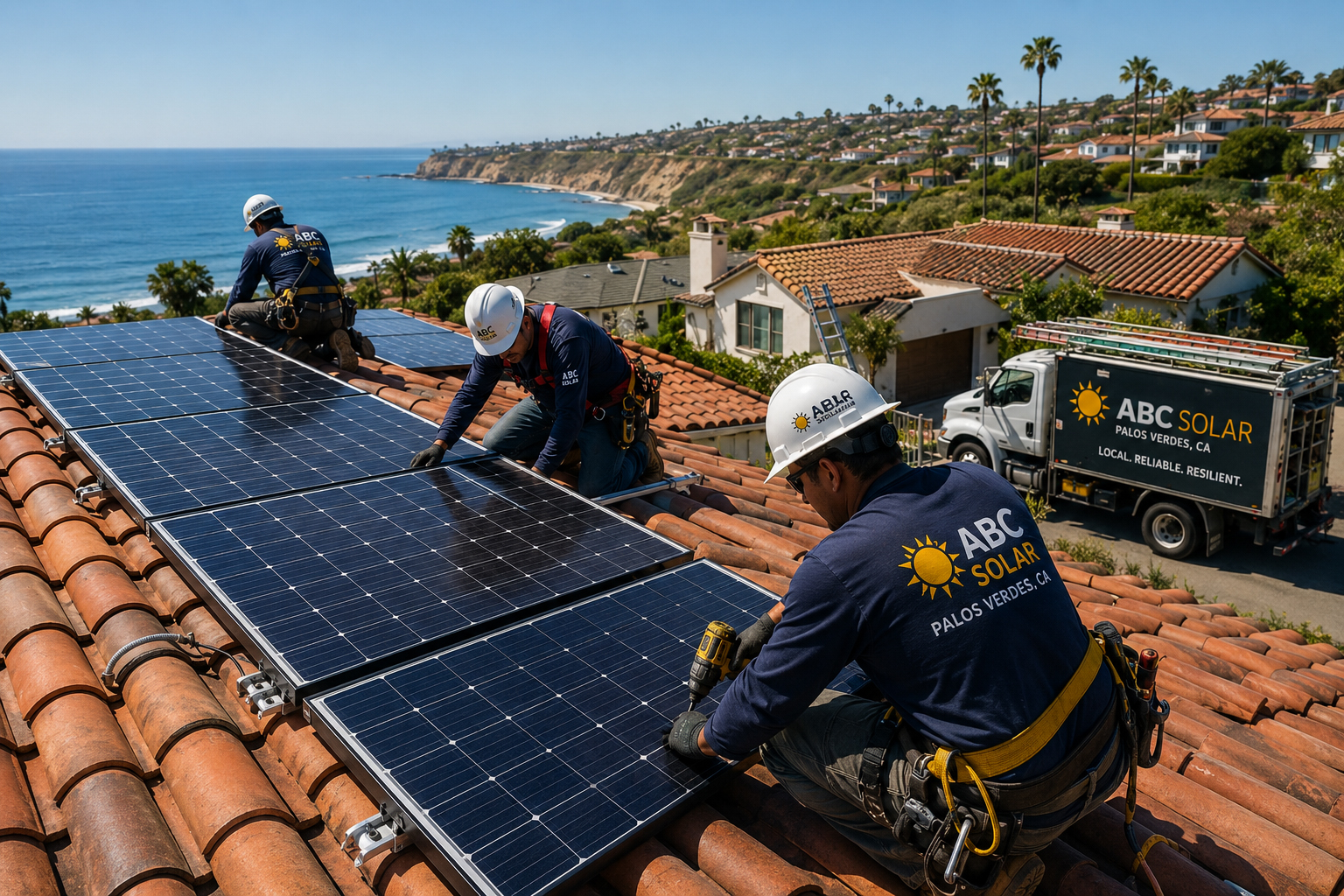
ABC Solar worked through difficult Palos Verdes conditions with practical field experience: assessing homes, designing solar and battery responses, protecting critical loads, and helping homeowners think beyond a simple utility bill. The work was not theoretical. It was local, physical, urgent, and tied to keeping people powered when the ordinary grid answer was not enough.

Portuguese Bend lesson: resilience must be designed before the emergency.

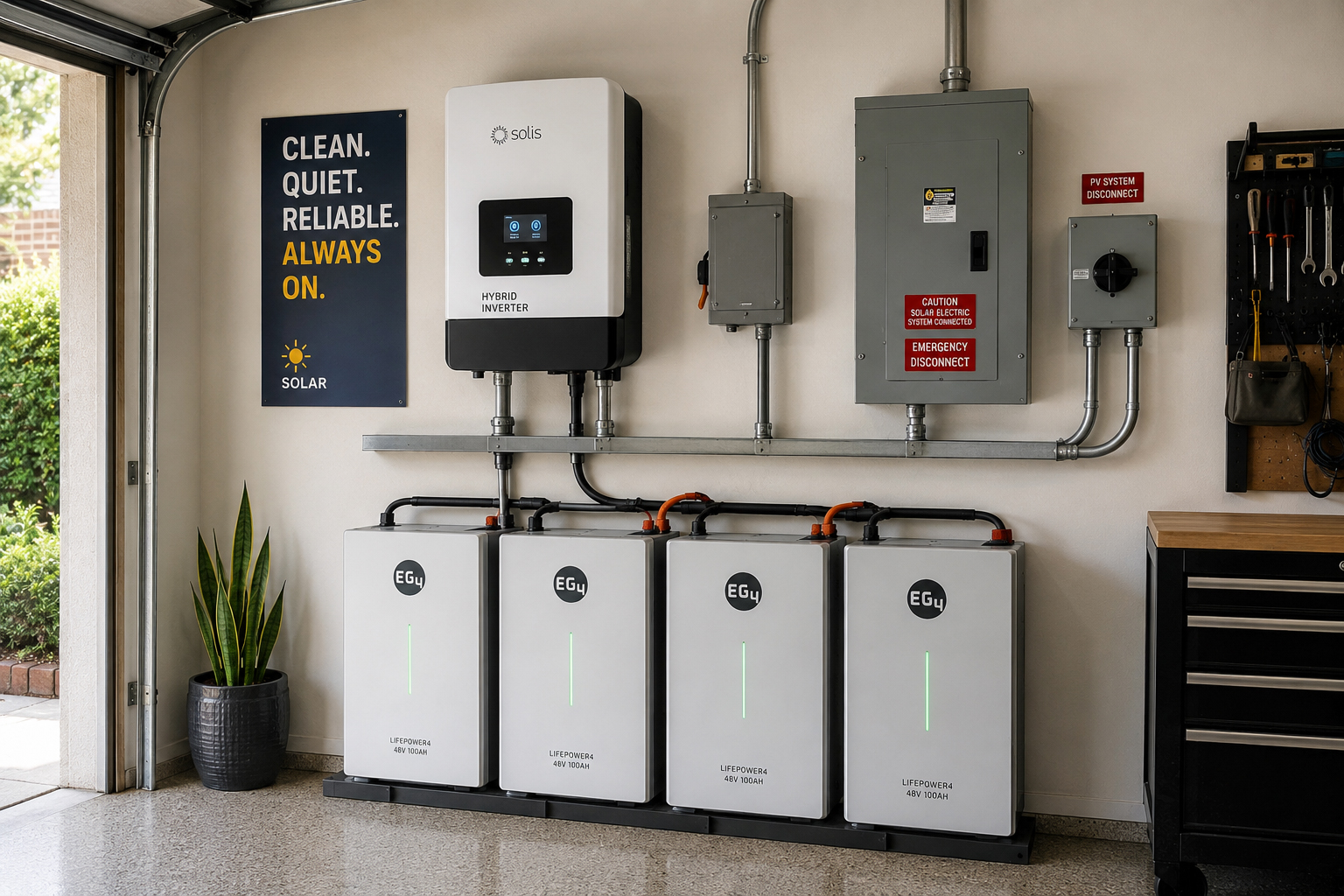
Solar alone makes power when the sun is shining. Solar with batteries can keep selected loads alive when utility power is down. In landslide territory, that distinction matters.

Climate

Palos Verdes is mild, coastal, sunny — and not simple.

The Peninsula benefits from a Southern California coastal Mediterranean climate: dry summers, mild temperatures, winter rain, ocean influence, and long stretches of usable sunlight.

For solar, that is good news. Cooler coastal air can help solar panels operate more efficiently than panels baking on a hotter inland roof. But local weather still matters. Morning marine layer can delay production. Winter storms reduce output just when some homes need heating, pumps, and backup power. Shade from trees, chimneys, ridgelines, and neighboring roof sections must be treated seriously.

A strong Palos Verdes solar design should consider:

  • South, southwest, southeast, east, and west roof faces
  • Marine layer production loss
  • Winter solar production, not just summer peak output
  • Battery sizing for evening, outage, and emergency needs
  • Roof type, age, and attachment method
  • SCE rate pressure, time-of-use rates, and the value of self-consumption

Solar + Batteries

What PVP Solar should mean

Design the roof first

Solar begins with the roof. Tile, slope, rafter conditions, usable area, setbacks, vents, shade, and service-panel limits all decide what is possible.

Design for winter too

Summer solar numbers can look easy. Winter is where the real design conversation begins: shorter days, cloudier weather, and higher household energy needs.

Battery backup is now central

For Peninsula homes, a battery system can support refrigerators, communications, lighting, medical equipment, garage doors, selected outlets, and other critical loads during outages.

Local contractor, local memory

ABC Solar has worked in Southern California solar since 2000. Palos Verdes requires a contractor who understands both the electrical system and the land under the house.

Start here

Call ABC Solar before the next outage, not after it.

For Palos Verdes Peninsula solar, battery backup, service, or site-specific planning, contact ABC Solar Incorporated.

Phone: 1-310-373-3169

Email: [email protected]

License: CCL#914346